

Mortgages for Foreigners in Spain 2026: Rates, Rules & LTV Guide: Buying a property in Spain is a dream that roughly 19% of all buyers in the country share—and the vast majority of them require financing. As we navigate March 2026, the Spanish lending environment has shifted significantly from the volatility of previous years. We have moved past the “rate shock” of 2023 and into a period of strategic stabilization.
For an international buyer, securing a mortgage in Spain is not just about finding a low interest rate; it is about navigating a complex regulatory framework designed to protect the bank and the borrower alike. This guide breaks down the technical math, the legal hurdles, and the 2026 market trends you need to know to secure a successful “Yes” from a Spanish lender.
1. The 2026 Market Context: Euribor and Interest Rates
As of March 2026, the 12-month Euribor—the benchmark for most Spanish mortgages—has settled at 2.221%. This represents a steady decline from the peaks of 2023, offering a much more favorable environment for non-resident investors.
Current Rate Expectations:
- Fixed-Rate Mortgages: For non-residents, full-term fixed rates are currently hovering between 2.8% and 3.5%. Note that for loans exceeding €500,000, many banks have removed “full fixed” options in 2026, steering high-value clients toward mixed or variable structures.
- Mixed-Rate Mortgages (The 2026 Favorite): This is currently the most competitive product. You lock in a fixed rate (around 2.5% to 2.8%) for the first 3, 5, or 10 years, after which the loan reverts to a variable rate (Euribor + a margin of ~0.80%).
- Variable-Rate Mortgages: These generally start at Euribor + 1.25% to 2.0%. While initially cheaper, they carry the risk of future market fluctuations.
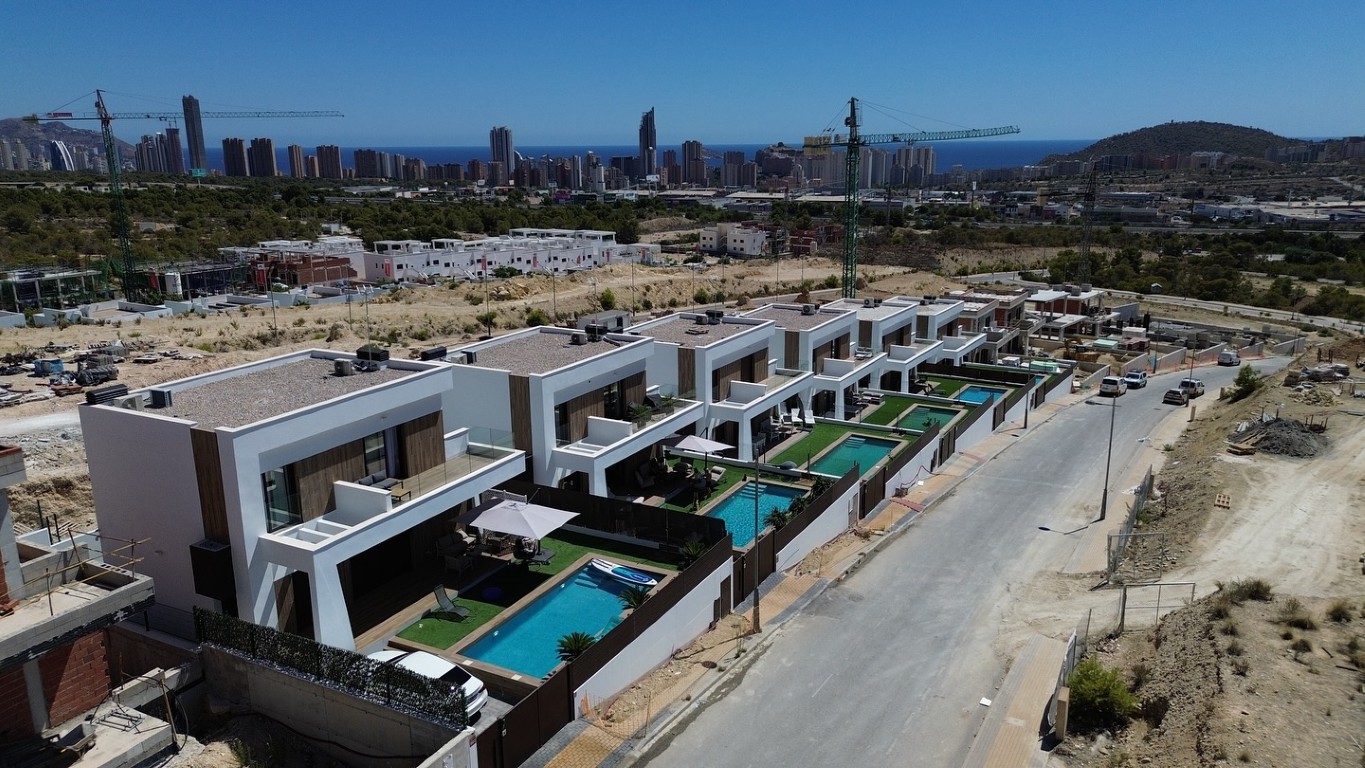
Information Gain: In 2026, banks are increasingly offering “Green Mortgages” with a 0.10% discount for properties with an Energy Efficiency Rating of A or B. This is particularly relevant for the new-build villas currently hitting the market in regions like the Costa Blanca.
2. Eligibility: Who Can Get a Mortgage in 2026?
Spanish banks are highly “foreigner-friendly,” but they categorize borrowers based on tax residency, not nationality.
- Non-Residents: Those who pay taxes outside of Spain. You are typically eligible for 60% to 70% LTV.
- Fiscal Residents: Those who live and pay taxes in Spain. You can often access 80% LTV and longer terms.
- Nationality Nuances: * EU/UK Citizens: Viewed as “low risk.” Documentation is standardized and easily verified.
- US/Canadian Citizens: Require additional FATCA documentation (Form W-9, IRS transcripts). Banks are very comfortable with US income but may apply a 10% currency “haircut” to account for USD/EUR volatility.
- Non-EU/Remote Nationalities: LTV may be capped strictly at 50–60% if the bank cannot easily verify credit history in the home country.

3. The Technical Math: Affordability & The 35% Rule
Spanish lenders do not just look at your salary; they look at your Debt-to-Income (DTI) ratio. This is the most common reason for a mortgage rejection in 2026.
Mortgages for Foreigners in Spain 2026: Rates, Rules & LTV Guide -The Calculation
Banks require that your total monthly debt obligations (including your new Spanish mortgage, existing mortgages in your home country, car loans, and credit cards) do not exceed 35% of your net monthly income.
Example:
- Total Net Monthly Income: €6,000
- Existing Home Mortgage: €1,200
- Car Loan: €300
- Available for Spanish Mortgage: (€6,000 x 0.35) – €1,500 = €600/month.
Minimum Income Benchmarks for 2026
While not set in stone, most major lenders (Sabadell, CaixaBank, Santander) look for the following minimums for non-residents:
- Single Applicant: €2,500 net per month.
- Joint Applicants: €4,000 combined net per month.
4. Loan-to-Value (LTV) and Your Cash Position
The “hidden” challenge of a Spanish mortgage is the amount of upfront cash required. Spanish banks do not finance taxes or fees.
Total Upfront Cash Required (Resale vs. New Build)
For a €400,000 property at 70% LTV: | Item | Cost (%) | Amount | | :— | :— | :— | | Down Payment | 30% | €120,000 | | Property Taxes (ITP or VAT) | 10% | €40,000 | | Notary, Registry, Legal | ~2-3% | €10,000 | | Total Cash Needed | ~43% | €170,000 |
Critical Note: The bank base their LTV on the lower of the purchase price or the bank valuation (tasación). If you buy a “bargain” for €300,000 but the bank valuer says it’s only worth €280,000, your 70% loan is based on the €280,000 figure.
5. The 12-Week Roadmap: From Search to Keys
In 2026, the process remains document-heavy. We recommend allowing 8 to 12 weeks for a smooth completion.
Phase 1: Pre-Approval (1–2 weeks)
Before you view properties, get a “Feasibility Study.” Submit your basic income docs to a broker or bank to get a non-binding offer.
- Requirement: You must have your NIE Number ready. (Reference our NIE Number Spain: 2026 Guide).
Phase 2: The Binding Offer (FEIN & FiAE) (2–4 weeks)
Once a property is chosen and a reservation (Arras) is signed, the bank issues the FEIN (Ficha Europea de Información Normalizada). This is a binding offer valid for a specific period.
- Legal Protection: Under the Spanish Mortgage Law, you have a 10-day reflection period after receiving the FEIN before you can sign at the Notary. This is mandatory and cannot be waived.
Phase 3: Valuation (Tasación) (1 week)
The bank sends an independent appraiser to the property. This cost (approx. €400–€800) is the only major mortgage fee the buyer pays directly in 2026.
Phase 4: Completion (2 weeks)
The bank, the seller, and the buyer meet at the Notary. Two deeds are signed: the Purchase Deed (Escritura de Compraventa) and the Mortgage Deed (Escritura de Préstamo Hipotecario).

New built villa for sale in Calpe
6. Closing Costs: Who Pays What in 2026?
Thanks to the 2019 Mortgage Law updates that are firmly in place for 2026, banks now pay the majority of the mortgage-related setup costs.
- Paid by the BANK:
- Notary fees for the mortgage deed.
- Land Registry fees for the mortgage.
- AJD Tax (Stamp Duty) on the mortgage.
- Gestoría (administrative) fees.
- Paid by the BUYER:
- The property valuation fee.
- Property Transfer Tax (ITP) for resales or VAT (IVA) for new builds.
- Notary & Registry fees for the Purchase (not the mortgage).
- Legal/Lawyer fees.
7. Linked Products: The “Bonificaciones” Trap
Banks will offer you a lower interest rate if you take “linked products.” Common ones include:
- Home Insurance (Seguro de Hogar): Mandatory by law, but you aren’t forced to take the bank’s version (though you lose a ~0.10% discount).
- Life Insurance (Seguro de Vida): Often the most expensive. Calculate if the interest rate saving is worth the high premium.
- Alarm Systems / Credit Cards: Some banks now offer discounts for installing an alarm or spending €3,000/year on their card.
Pro-Tip: Always ask for the TAE (APR). The TAE includes the cost of these insurances and reflects the true cost of the loan.
8. Specific Considerations for 2026 Developments
If you are financing a New Build in the Costa Blanca (such as the luxury villas in Pilar de la Horadada), you have two main options:
- Developer Subrogation: You “take over” the developer’s existing mortgage. This can save on some setup costs but might not offer the best interest rate.
- New Individual Mortgage: You find your own financing. This is usually better for non-residents to ensure the product fits their specific tax home.
9. Frequently Asked Questions (AEO Focused)
Can I get a mortgage in Spain if I am self-employed?
Yes. You will need to provide at least two years of audited accounts or tax returns. Banks may apply a 20% “safety buffer” to your stated income when calculating affordability.
What is the maximum age for a Spanish mortgage?
Most banks require the mortgage to be paid off by the time the oldest borrower reaches age 75. If you are 55, your maximum term will likely be 20 years.
Do I need a Spanish bank account?
Yes. While you can technically pay from abroad, almost all lenders require you to hold an account with them for the monthly mortgage direct debits. See our Opening a Spanish Bank Account Guide.
Are there early repayment penalties?
For Variable mortgages, penalties are capped at 0.25% for the first 3 years and 0% thereafter. For Fixed mortgages, they can be up to 2% in the first 10 years and 1.5% after that, but only if the bank suffers a “financial loss” from your early exit.
10. Conclusion: Strategy for 2026 Buyers
The window for 2026 is one of stability. With the Euribor at 2.22%, the cost of borrowing has normalized. The key to success is preparation: having your NIE ready, your 35% DTI calculated, and your 43% cash liquid.
By locking in a mixed-rate deal today, you protect yourself against the volatility of the later 2020s while enjoying the lower entry rates available this spring.
Internal Resources for Your Purchase:
- Logistics: How to Get Your NIE Number in Spain: 2026 Guide
- Banking: Opening a Spanish Bank Account: 2026 Step-by-Step
- Taxation: Spanish Property Taxes 2026: The Complete Breakdown
- Comparison: Benidorm vs. Alicante: 2026 Comparison
Verified Sources:
- Banco de España: Official 2026 Euribor Data
- Spanish Tax Agency: Non-Resident Tax (Model 210) Info
- Notary Council of Spain: Buying Process & Legal Requirements




 English
  Español
  Nederlands
  Русский
  Français
  Polski